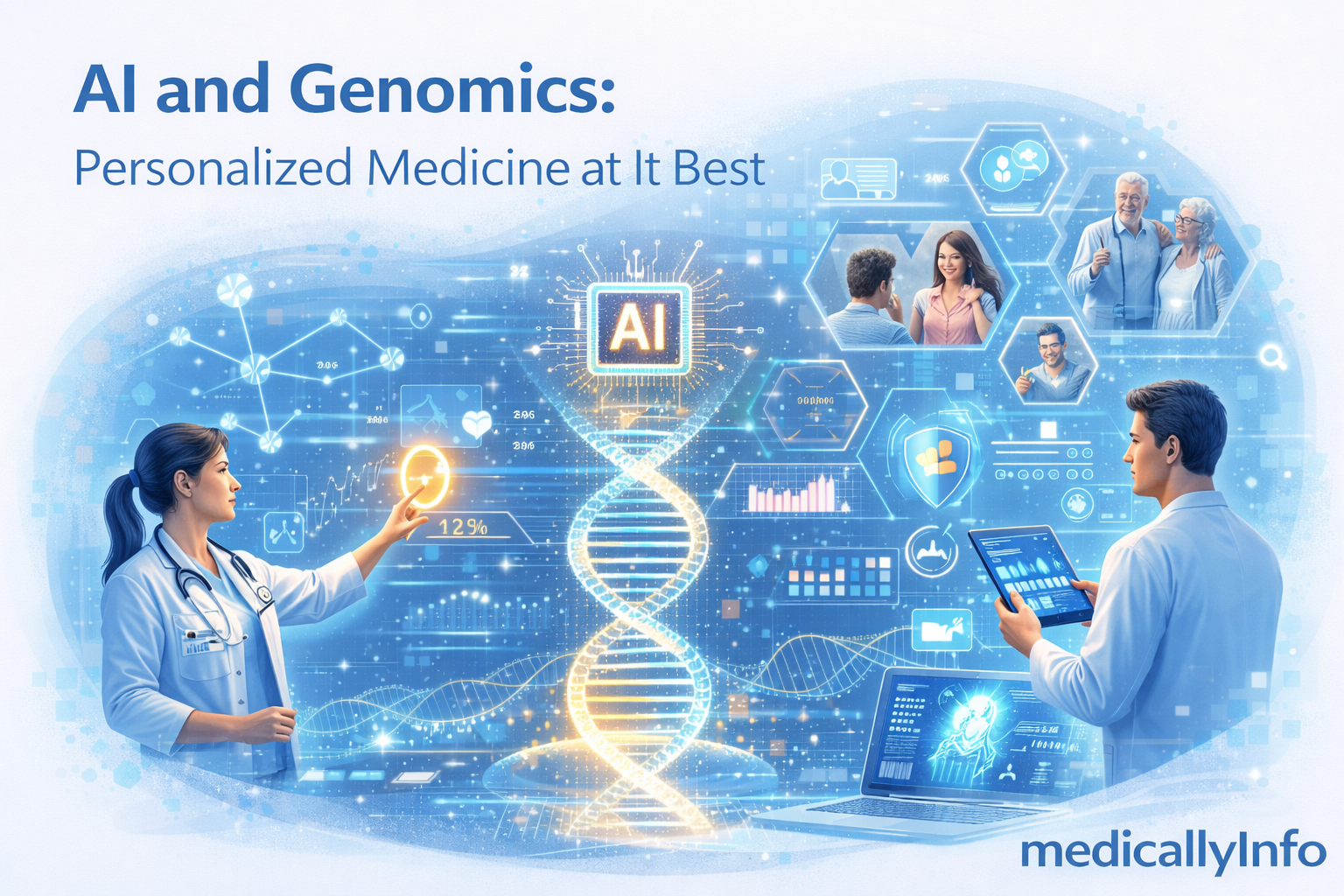
Modern medicine is shifting away from a one-size-fits-all approach toward treatments tailored to individual patients. At the center of this transformation is the powerful combination of artificial intelligence (AI) and genomics. Together, these technologies are helping healthcare providers better understand genetic differences, predict disease risks, and design treatments that are more precise and effective.
As research advances, AI-driven genomics is becoming a cornerstone of personalized medicine — an approach that focuses on delivering the right treatment to the right patient at the right time.
What Is Genomics?
Genomics is the study of a person’s complete set of DNA, including all of their genes and how they interact with each other and the environment. Unlike traditional genetic testing, which may focus on a single gene, genomics analyzes the entire genome to uncover patterns that influence health.
Every individual has unique genetic variations that can affect how diseases develop, how the body responds to medications, and even how quickly someone recovers from illness. Understanding these variations allows clinicians to move beyond generalized treatment strategies.
The Role of Artificial Intelligence in Genomics
The human genome contains billions of data points. Analyzing such vast information manually would take years, but artificial intelligence can process this data in a fraction of the time.
AI systems use advanced algorithms and machine learning models to identify patterns that might otherwise go unnoticed. These tools can detect genetic mutations linked to specific diseases, predict inherited conditions, and help researchers discover new therapeutic targets.
By accelerating data analysis, AI is making genomic insights more practical for everyday clinical use.
How AI and Genomics Enable Personalized Medicine
Personalized medicine focuses on tailoring healthcare decisions based on an individual’s genetic profile, lifestyle, and environmental factors. AI enhances this approach by turning complex genomic data into actionable insights.
For example, genetic testing combined with AI analysis can help physicians determine which medications are likely to work best for a patient. This reduces the trial-and-error process often associated with treatment and lowers the risk of adverse drug reactions.
In oncology, AI-driven genomic profiling allows doctors to identify mutations within tumors and select therapies designed to target those specific changes. This precision improves treatment effectiveness while minimizing unnecessary side effects.
Predictive analytics is another major benefit. AI can estimate a person’s likelihood of developing certain conditions, enabling earlier interventions and preventive care.
Transforming Disease Detection
Early detection plays a crucial role in improving health outcomes, and AI-powered genomics is significantly enhancing diagnostic capabilities.
Machine learning models can scan genomic data to identify subtle markers associated with diseases such as cancer, cardiovascular conditions, and rare genetic disorders. Detecting these signals early allows healthcare providers to begin treatment sooner, often before symptoms appear.
For rare diseases — which historically have been difficult to diagnose — AI is helping shorten diagnostic journeys that once took years.
Pharmacogenomics: Smarter Medication Choices
One of the most practical applications of AI in genomics is pharmacogenomics, the study of how genes influence a person’s response to medications.
Genetic differences can determine how quickly a drug is metabolized, how effective it will be, or whether it might cause harmful side effects. AI helps interpret these genetic markers so clinicians can prescribe medications with greater confidence.
This approach not only improves patient safety but may also reduce healthcare costs by avoiding ineffective treatments.
Advancing Preventive Healthcare
AI-driven genomic insights are shifting healthcare from reactive treatment toward proactive prevention.
Instead of waiting for disease to develop, clinicians can identify high-risk individuals and recommend lifestyle changes, screenings, or preventive therapies. For example, someone with a genetic predisposition to heart disease may benefit from earlier monitoring and targeted interventions.
Preventive strategies supported by genomic data have the potential to significantly reduce the burden of chronic illness.
Accelerating Drug Discovery
Developing new medications is traditionally a long and expensive process. AI is helping streamline this pathway by analyzing genomic data to identify promising drug targets more quickly.
Researchers can simulate how different compounds interact with genetic pathways, narrowing down candidates before clinical trials begin. This efficiency may lead to faster availability of treatments for complex diseases.
AI is also enabling the development of therapies designed for specific genetic subgroups, further strengthening the foundation of personalized medicine.
Challenges and Ethical Considerations
Despite its promise, the integration of AI and genomics raises important challenges.
Data privacy remains a primary concern. Genetic information is deeply personal, and protecting it from misuse is essential. Healthcare organizations must implement strong security measures and transparent policies regarding data usage.
Another issue is accessibility. Advanced genomic testing and AI-driven analysis may not yet be available to all populations, potentially widening healthcare disparities.
Interpretation of genetic data also requires careful oversight. While AI can provide powerful insights, human expertise is necessary to ensure responsible clinical decisions.
Ethical questions surrounding genetic information — such as how it may affect insurance or employment — continue to be actively discussed within the medical community.
The Future of AI-Powered Genomic Medicine
The future of healthcare is increasingly personalized, and AI is expected to play an even larger role in genomic medicine. Advances in sequencing technology are making genome analysis faster and more affordable, opening the door to broader adoption.
In the coming years, routine healthcare visits may include genomic screening, allowing providers to build highly individualized care plans.
Integration with wearable devices, electronic health records, and predictive analytics could further enhance decision-making. AI models may eventually forecast health risks with remarkable accuracy, enabling truly preventive care.
As research continues, the collaboration between data scientists, geneticists, and healthcare providers will shape a more precise and patient-centered medical landscape.
Is Personalized Genomic Medicine Right for Everyone?
While genomic testing offers valuable insights, it may not be necessary for every individual. The decision often depends on medical history, family risk factors, and physician recommendations.
For patients with complex conditions or strong hereditary disease patterns, genomic analysis can provide critical guidance. Consulting a qualified healthcare professional is the best way to determine whether this approach is appropriate.
Final Thoughts
The convergence of artificial intelligence and genomics represents one of the most significant advancements in modern healthcare. By unlocking deeper insights into human biology, these technologies are enabling treatments that are more targeted, effective, and preventive.
Although challenges related to privacy, access, and ethics remain, the potential benefits are substantial. As AI continues to refine genomic analysis, personalized medicine is poised to become not just an emerging trend but a standard of care.
In this new era, healthcare is evolving from generalized treatment toward precision — ensuring that medical decisions are guided by the unique genetic blueprint of every individual.


