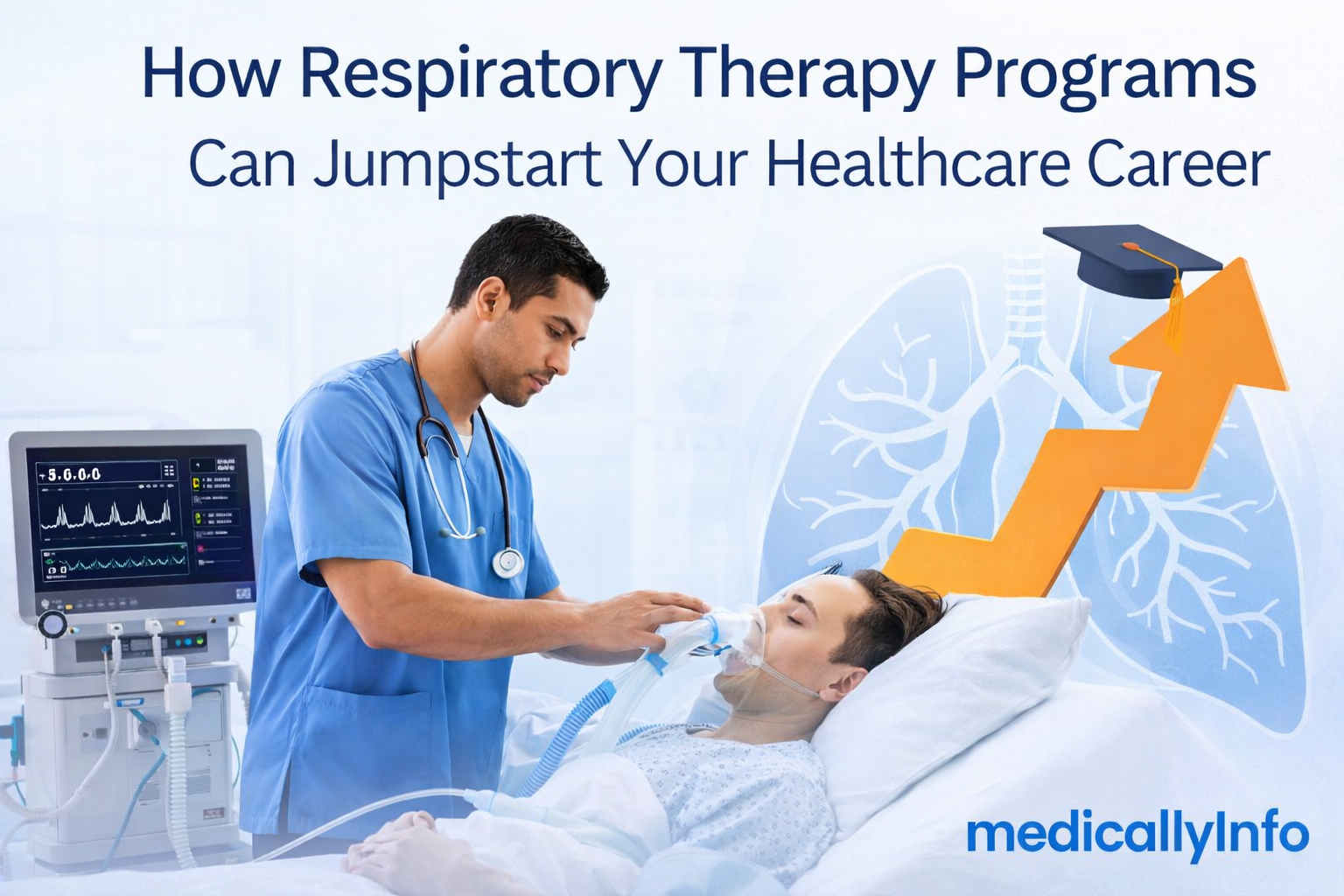
If you’re exploring ways to break into healthcare, respiratory therapy programs offer a fast, focused, and deeply rewarding path.
I remember shadowing a respiratory therapist during a hospital internship.
It was during a night shift, and a child came into the ER struggling to breathe.
Watching the therapist calmly assess the situation, set up a nebulizer, and coach the child through the panic—it stuck with me.
That moment showed me that this job isn’t just about medicine.
It’s about saving lives with every breath.
What Do Respiratory Therapists Actually Do?
Respiratory therapists help patients who have trouble breathing.
They treat people with chronic respiratory diseases like asthma, COPD, and emphysema.
They also work with premature babies whose lungs aren’t fully developed.
And they’re critical in emergencies, helping revive patients who’ve suffered strokes or cardiac arrest.
A typical day might involve managing ventilators, administering oxygen, or working with doctors on treatment plans.
This makes the job incredibly hands-on and dynamic.
Why Choose Respiratory Therapy?
One reason is the growing demand.
With respiratory illnesses on the rise and aging populations needing more care, skilled therapists are in high demand.
Another reason?
The training is focused.
Unlike general nursing programs that can take years, respiratory therapy programs often allow you to specialize quickly and get into the field sooner.
And then there’s the variety.
You might work in a neonatal unit one day and a trauma center the next.
Or maybe in-home care, where you help patients recover in their living rooms.
A Real-Life Career Path: From Student to Specialist
I met Sarah during our clinical rotations.
She started the program straight out of high school.
No medical background.
What drew her in was a family member with cystic fibrosis.
She wanted to do more than just be there—she wanted to help.
Within two years, she was certified and working in a Level 1 trauma center.
By her third year, she specialized in pediatric respiratory care.
Today, she leads a team of therapists and mentors new students.
All because of a single decision to enroll in a respiratory training program.
What to Expect from a Respiratory Therapy Program
Most programs start with classroom instruction on anatomy, physiology, and patient care.
Then comes simulation labs, where you practice with equipment in mock hospital settings.
The final stretch includes clinical placements.
This is where you apply everything in real healthcare environments.
You’re not fetching coffee.
You’re adjusting ventilator settings and monitoring patients alongside professionals.
Expect long days and emotional shifts—but also confidence-boosting breakthroughs.
Top Skills You’ll Learn Along the Way
Airway management is at the core—knowing how to clear and maintain open airways.
Mechanical ventilation training teaches you how to operate and monitor life-support equipment.
Patient assessment skills will help you identify signs of distress before they become critical.
You’ll also develop strong communication.
Therapists are constantly educating patients, reassuring families, and collaborating with doctors.
Career Options After Graduation
Graduates aren’t limited to one setting.
Hospitals hire respiratory therapists in ICUs, ERs, and surgical recovery units.
Home healthcare agencies bring therapists to patients’ homes.
Rehabilitation centers, sleep labs, and pulmonary clinics all rely on respiratory expertise.
You could also teach, manage respiratory departments, or even become a clinical specialist for medical device companies.
One classmate of mine ended up working on a mobile critical care transport team—riding in helicopters with paramedics.
Certifications That Boost Your Credentials
Most graduates aim for the RRT (Registered Respiratory Therapist) certification.
It’s often required for hospital jobs and higher salaries.
Some go further with neonatal/pediatric, pulmonary function testing, or sleep disorder credentials.
Each certification opens more doors and gives you an edge in specialized care.
How to Know If It’s the Right Fit for You
You don’t need to be a science genius.
You need to care.
If you’re drawn to fast-paced environments, have steady hands, and want to see the impact of your work immediately—this could be your path.
You also need emotional resilience.
Patients won’t always improve.
But the ones who do, the ones who walk out of the hospital because of your care—that makes it all worth it.
Advice from a Respiratory Therapist
During one of my rotations, an RT told me something I’ll never forget.
“This job isn’t about machines. It’s about people. Every beep, every reading—it’s a life. Never forget that.”
It was a reminder that even though we’re trained in highly technical skills, compassion is still the most powerful tool we have.
FAQs About Respiratory Therapy Programs
How long does it take to complete a respiratory therapy program?
Most programs take about two years for an associate degree, and around four years if you’re going for a bachelor’s.
Some schools offer accelerated paths or flexible online formats.
Are online respiratory therapy programs legit?
Yes, as long as they’re accredited by the Commission on Accreditation for Respiratory Care (CoARC).
Many programs now offer hybrid options—online theory plus in-person clinicals.
Is respiratory therapy a good long-term career?
Absolutely.
It’s stable, in demand, and offers multiple career advancement paths.
Whether you want to specialize, lead, or teach—there’s always room to grow.
Do you need a license?
Yes.
Each state has its own licensing requirements, but most align with the NBRC credentialing exams.
Make sure the program you choose prepares you for this.
The Final Breath
Choosing a career in respiratory therapy isn’t just about job security.
It’s about showing up when someone can’t breathe—and helping them take that next breath.
That’s powerful.
And it starts with choosing the right program.
Whether you’re fresh out of school or looking for a meaningful career change, respiratory therapy programs could be the spark that starts it all.


