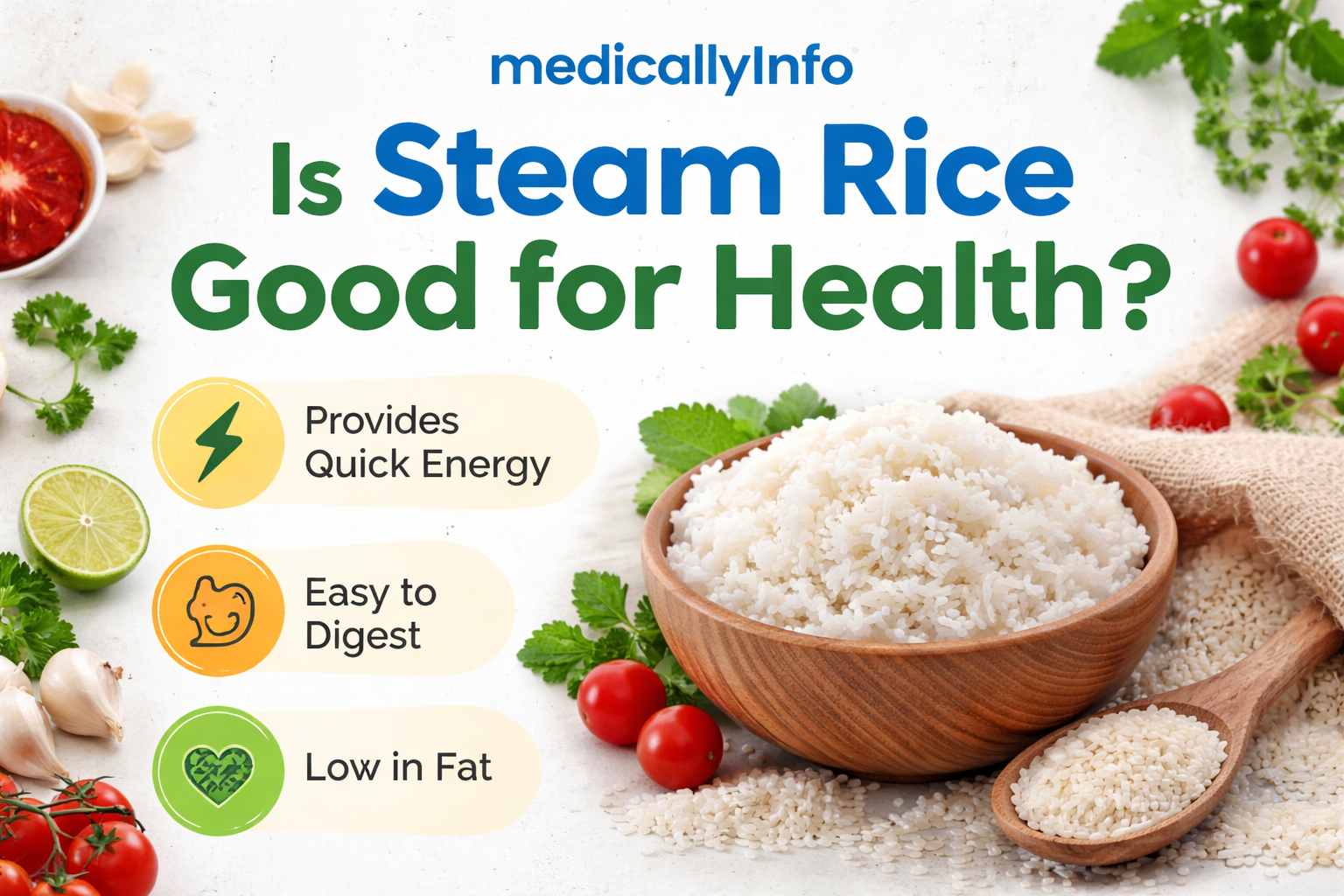
Steam rice is one of the most commonly consumed staple foods across many countries, especially in Asia. From simple home-cooked meals to elaborate dishes, steamed rice forms the base of countless recipes. But many people often wonder: is steam rice good for health?
The answer depends on factors such as portion size, overall diet, and individual health conditions. While steam rice provides energy and important nutrients, excessive consumption may have some drawbacks.
In this article, we will explore the nutritional value, health benefits, potential risks, and the right way to include steam rice in a healthy diet.
What Is Steam Rice?
Steam rice refers to rice that is cooked using steam or boiling water without frying or adding excessive oil. The grains absorb water during cooking, making them soft and easy to digest.
It is considered one of the simplest and healthiest ways to prepare rice, as the cooking method retains most of the nutrients without adding unhealthy fats.
Steam rice can be made from different varieties of rice such as:
- White rice
- Brown rice
- Basmati rice
- Jasmine rice
Each type has slightly different nutritional properties, but the basic benefits of steamed rice remain similar.
Nutritional Value of Steam Rice
Steam rice is mainly known as a source of carbohydrates, which provide energy to the body. Even though it is simple, it still contains several nutrients that support daily bodily functions.
A typical serving of cooked steamed rice (about 100 grams) contains approximately:
- Calories: Around 120–130 kcal
- Carbohydrates: 28–30 grams
- Protein: 2–3 grams
- Fat: Less than 1 gram
- Fiber: Small amount (higher in brown rice)
- Vitamins: Small amounts of B vitamins
- Minerals: Magnesium and phosphorus
These nutrients make steamed rice an important energy source in many diets.
Health Benefits of Steam Rice
Provides Quick Energy
Steam rice is rich in carbohydrates, which are the body’s primary source of energy. This makes it especially beneficial for people who need sustained energy throughout the day, such as students, athletes, and physically active individuals.
Easy to Digest
One of the biggest advantages of steam rice is that it is light on the stomach and easy to digest. That’s why it is often recommended for people recovering from illness or digestive issues.
Naturally Low in Fat
Steamed rice contains very little fat, making it a healthier option compared to fried or oily foods. When combined with vegetables, lentils, or lean protein, it can become part of a balanced meal.
Gluten-Free Food
Steam rice is naturally gluten-free, which makes it safe for people with gluten intolerance or celiac disease.
Supports Gut Health
When eaten with fiber-rich foods such as vegetables, beans, or salads, steam rice can contribute to better digestion and gut health.
Suitable for a Balanced Diet
Steam rice can easily be paired with different foods like:
- Vegetables
- Lentils (dal)
- Chicken or fish
- Yogurt
This makes it a flexible and versatile food that fits into many healthy diets.
Is Steam Rice Good for Weight Loss?
Steam rice can be included in a weight loss diet, but portion control is important.
Since rice is high in carbohydrates, eating large portions may lead to excess calorie intake. However, when eaten in moderate quantities along with fiber and protein-rich foods, it can support healthy weight management.
For better weight control:
- Choose brown rice or unpolished rice when possible
- Keep portion sizes moderate
- Combine rice with vegetables and protein
Potential Downsides of Steam Rice
Although steam rice has many benefits, excessive consumption may cause some issues.
High Glycemic Index
White steamed rice has a high glycemic index, meaning it can raise blood sugar levels quickly. This may be a concern for people with diabetes.
Low Fiber Content
Regular white rice contains less fiber compared to whole grains. Low fiber intake may affect digestion if rice is eaten without vegetables or other fiber-rich foods.
Overconsumption Can Lead to Weight Gain
Eating large amounts of rice regularly without balancing it with other nutrients may contribute to weight gain over time.
Who Should Be Careful with Steam Rice?
Some people should monitor their rice consumption carefully, including:
- People with diabetes
- Individuals trying to lose weight
- Those following low-carb diets
In such cases, portion control and choosing healthier varieties like brown rice may be beneficial.
Tips for Eating Steam Rice in a Healthy Way
To make steam rice healthier, follow these simple tips:
- Control portion sizes
- Pair rice with vegetables and protein sources
- Choose brown rice or whole-grain rice when possible
- Avoid excessive sauces or fried accompaniments
These habits can help maintain a balanced and nutritious diet.
Conclusion
So, is steam rice good for health? The answer is yes, when eaten in moderation and as part of a balanced diet. Steam rice provides essential energy, is easy to digest, and is naturally low in fat.
However, relying too heavily on white rice without including other nutrients may lead to health concerns such as blood sugar spikes or weight gain. By combining steamed rice with vegetables, proteins, and healthy lifestyle habits, it can remain a healthy and satisfying part of daily meals.


