Milk tea is one of the most popular beverages in many parts of the world, especially in countries like India, the United Kingdom, and several Asian nations. For many people, starting the day with a cup of milk tea is part of their daily routine. But a common question often arises: is milk tea good for health?
The nutrients found in tea and milk give milk tea some advantages. But high use or excessive sugar can limit its health benefits. Learning about the things that work and what may take place in the human body helps make milk tea a more nutritious drink. Here we will discuss the basics of milk tea, nutritional value, health benefits, potential risks, and how to make sure to drink milk tea wisely.
What Is Milk Tea?
Milk tea is a drink made by combining tea leaves (most often black tea), milk, water, and sugar. This mixture is then boiled or brewed together for creation.
Milk tea is prepared in many ways in different cultures. For example:
- Indian chai is frequently peppered with spices like ginger, cardamom, or cloves.
- British milk tea is typically made by adding milk to brewed tea.
- Bubble tea from some Asian countries is made with milk, tea, sweeteners, and tapioca pearls.
The fundamental ingredients are tea and milk, no matter the particular preparation style.
Nutritional Value of Milk Tea
Milk tea contains nutrients from both tea and milk. But the nutritional value varies with an increase in the quantity of milk and sugar.
| Nutrient | Amount (Approximate) |
|---|---|
| Calories | 80 – 120 kcal |
| Carbohydrates | 10 – 15 g |
| Protein | 2 – 4 g |
| Fat | 2 – 4 g |
| Calcium | Moderate amount |
| Caffeine | 30 – 50 mg |
| Antioxidants | Present in tea |
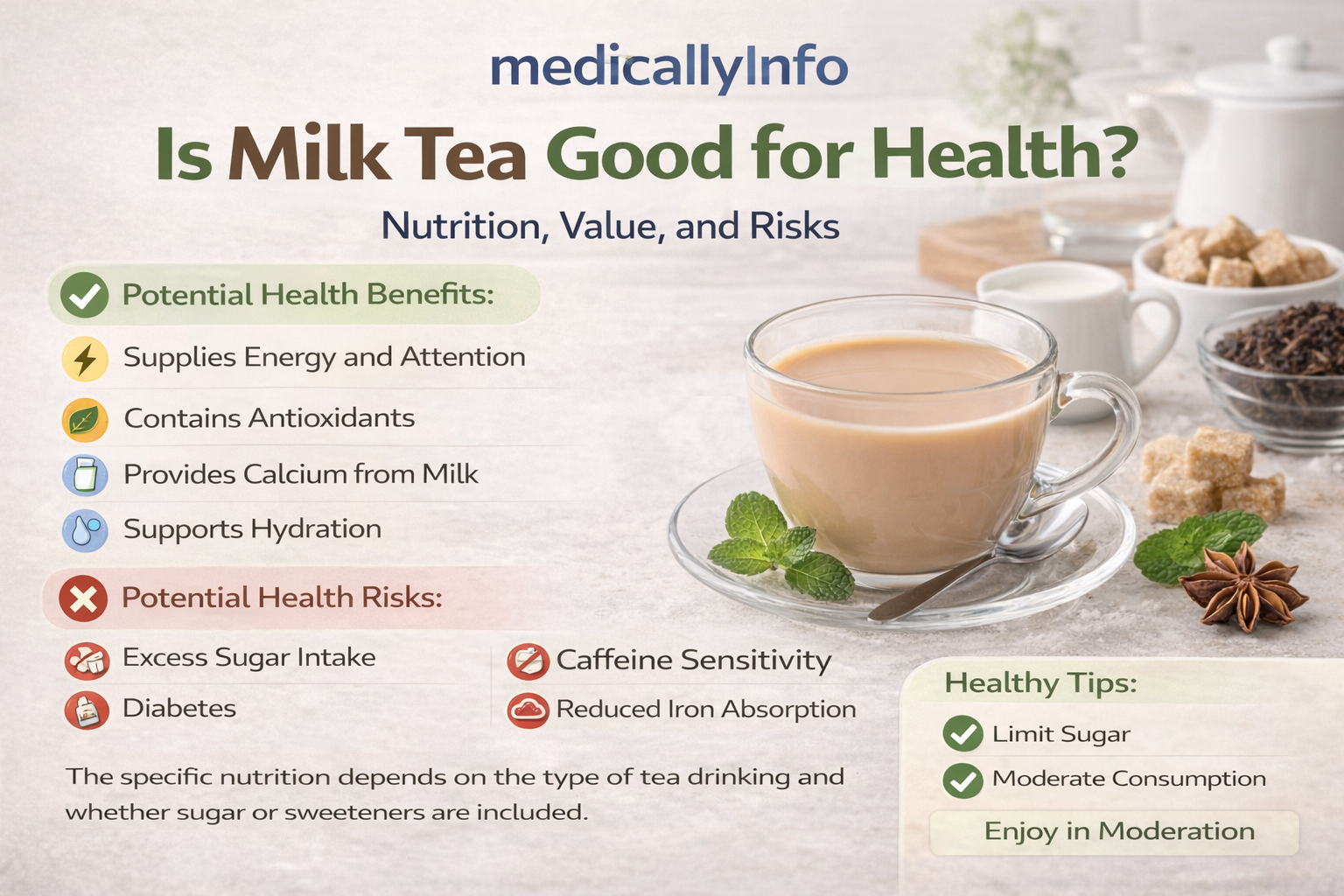
The specific nutrition depends on the type of tea drinking and whether sugar or sweeteners are included.
Supplies Energy and Attention
This is caffeine in milk tea, making you more awake and focused. Most people drink tea in the morning or at work to fill themselves with energy.
Contains Antioxidants
Black tea contains many antioxidants — polyphenols and the like — that help to protect the body against free radical damage.
Provides Calcium from Milk
Calcium and Protein From Milk: Milk is important to keep bones and teeth healthy.
Supports Hydration
Milk tea also adds to your daily fluid intake and keeps you hydrated, despite the fact that it’s caffeine-laden.
Potential Health Risks of Drinking Milk Tea
In these ways milk tea can even be beneficial but also problematic if we intake it in excessive amounts.
Excess Sugar Intake
So, many individuals consume lots of sugar in milk tea. Increased sugar intake may raise the risk of:
- Weight gain.
- Diabetes.
- Tooth decay.
Caffeine Sensitivity
Excessive caffeine may result in:
- Sleep problems.
- Nervousness.
- Increased heart rate.
People sensitive to caffeine should limit their intake of tea.
Reduced Iron Absorption
Tea includes compounds known as tannins, and when ingested in large doses, including meals, they can decrease iron absorption from specific foods.
Milk Tea and Weight Loss
In fact, milk tea, when consumed in moderation, can be very powerful to help someone lose weight. But sprinkling sugar, condensed milk or flavored syrups in it can drastically elevate caloric consumption.
To assist people with weight loss:
- Cut down the sugar or add less sweetener.
- Choose low-fat milk.
- Restrict how many cups you have per day.
How Much Milk Tea Is Safe to Drink?
For health professionals, drinking only moderate amounts of caffeine is advised. Of particular concern is not to increase caffeine in this amount.
For a majority of adults, a drink in between 1 and 2 cups of milk tea per day is usually considered safe.
But people might also have varying tolerance to caffeine.
Guidelines on How to Drink Milk Tea in a Healthier Manner
There are a few simple tips that you can always do to make milk tea and eat a balanced diet:
- Minimize the amount of added sugar.
- Use low-fat or plant-based milk if preferred.
- Avoid drinking tea following iron rich meals.
- Limit excessive consumption throughout the day.
These minor changes can render milk tea a healthier beverage.
Conclusion
And so, is milk tea good for you? The answer is yes–when used in moderation. Milk tea provides antioxidants from tea and calcium from milk, both of which offer some health benefits.
But an overdose on sugar and caffeine could diminish its health benefits. If just drinking milk tea and sugar consumption is moderate then it can become a part of your daily routine that is still enjoyable and in balance.


