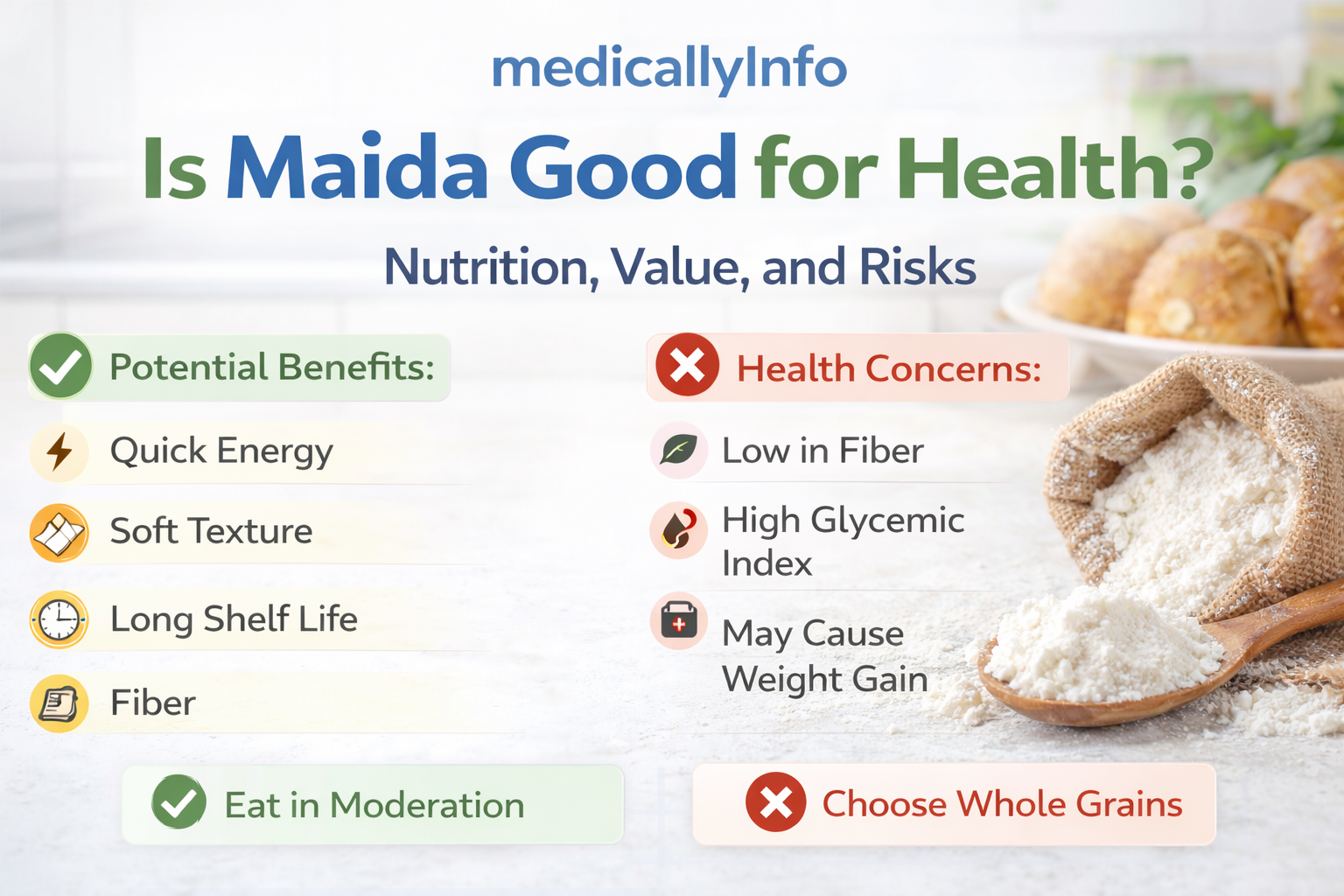
Maida (also known as refined wheat flour) is frequently used in a wide variety of cuisines in the world. Commonly consumed, it is present in bread, biscuits, pastries, noodles, pizza bases, and other bakery products. Since it appears in so much food the world over, plenty of people ask: Is maida good for you?
The answer is not fully simple. Maida is high in carbohydrate to offer energy but also has some disadvantages due to its highly refined quality. Once you know what is good for you in its nutritional value, and how it might affect the body, then you can determine how much to consume. In this article, we will define maida, its nutritional value, and some health benefits, risks, and more.
What Is Maida?
Maida is an ultra-pure form of wheat flour produced by milling whole wheat grains. In this process, we peel away the bran and germ layers of the wheat grain to leave only the starchy endosperm.
The flour is finely ground, bleached and refined to yield the smooth, white flour that we call maida.
Because the bran and germ are removed, maida has:
- A fine texture.
- A longer shelf life.
- A soft consistency for baking.
But in the process, it eliminates a lot of the important nutrients and fibre that come right out of whole wheat.
Nutritional Value of Maida
Maida mainly consists of carbohydrates which offer energy to the body. But, as raw content of the material is refined its fiber, vitamins and minerals are less than those of the whole wheat flour.
Below you’ll find an approximate nutritional value of 100 grams of maida.
Nutrition Value Table
| Nutrient | Amount (at about 100 g) |
|---|---|
| Calories | 360 – 370 kcal |
| Carbohydrates | 75 – 76 g |
| Protein | 10 – 11 g |
| Fat | 1 – 1.5 g |
| Fiber | 2 – 3 g |
| Iron | Small amounts |
| Calcium | Small amounts |
| Vitamin B | Small traces |
Due to the loss of almost all fibre and nutrients during processing, maida has been thought to be less nutritious than whole wheat flour (atta).
Possible Benefits of Maida
While maida has always been criticized as unhealthy, it provides some benefits when eaten well.
Provides Quick Energy
Maida is abundant in carbohydrates — our body’s most valuable energy source. Dietary items produced from maida can be excellent fuel for physical activity, especially for the fast-paced person who wants to make energy-packed meals.
Texture for Cooking and Baking
Maida is very commonly used for cooking because it forms a soft, even texture in meals like cakes, breads and pastry, especially when preparing and baking.
Longer Shelf Life
Refined flour such as maida also has a longer shelf life than whole wheat flour because it does not contain the natural oils in the bran and germ.
Health Concerns of Maida
Though convenient, high intakes of maida may pose many health problems.
Low Fiber Content
As the bran is removed in processing, maida contains very little dietary fiber. Fiber is vital for digestion and promoting gut health.
A low-fiber diet can lead to:
- Constipation.
- Poor digestion.
- Reduced gut health.
High Glycemic Index
Maida has a high glycemic index, meaning that it can raise blood sugar rapidly. This might be worry-inducing for those with diabetes or anyone working to lower their blood-sugar levels.
May Contribute to Weight Gain
Food prepared with maida typically has other ingredients like sugar and fat. Eating these foods a lot can cause weight gain and obesity.
Low Nutritional Density
Compared with whole grains, maida contains far fewer vitamins, minerals, and fiber making it a less nutritious staple food.
Maida vs Whole Wheat Flour
Maida, whole wheat flour (atta) is one of the comparisons that people take.
| Feature | Maida | Whole Wheat Flour |
|---|---|---|
| Fiber | Very low | High |
| Nutritional value | Lower | Higher |
| Blood sugar impact | Higher | Lower |
| Digestibility | Easier to digest but not as healthy | Better for long-term health |
Whole wheat flour keeps the bran and germ, fiber, vitamins, minerals and antioxidants.
Is Maida Bad for Health?
Maida is not always terrible if it’s eaten from time to time. But eating food made with maida may, over the years, raise the risk of a few health issues.
A lot of nutrition experts advise on limiting refined flour and substituting it with healthier options like:
- Whole wheat flour.
- Oat flour.
- Millet flour.
- Multigrain flour.
How To Restrict Eating Maida?
Others should be a bit more cautious about food made from maida.
These include:
- People with diabetes.
- People trying to lose weight.
- People with digestive issues.
- Individuals who are looking for a high-fiber diet.
Cut back on refined flour you consume to achieve better overall health.
What to Do for Your Dining Maida Healthier
You might want some of these foods whenever you eat maida, but it was very easy to incorporate using a few healthy habits.
- Eat maida in moderation.
- Mix them with good foods such as vegetables or salads rich in fiber.
- Do not consume many deep-fried or sugary maida products.
- If possible, use whole grain replacements.
With such modest edits, refined flour’s ill effects are mitigated.
Conclusion
Is maida good for your health, anyway? Much of it will be determined by how often one consumes the food. Maida provides energy and is useful in cooking and baking, but lacks many of the essential nutrients found in whole grains.
Frequent and excessive maida consumption is thought to cause problems, like fat accumulation, blood sugar peaks, and digestion issues.
To eat less of the food, especially the maida, and to use whole grains in the diet when it’s possible.
So staying in line when it comes to eating a variety of house foods might cause you to have some occasional foods made with maida and all the while you can still support your health.


